一个 CPU cache 的性能小知识
搜其他问题无意间看到的一个有意思的小知识,原文在这里:
https://fastcompression.blogspot.com/2014/09/counting-bytes-fast-little-trick-from.html主要的现象就是:
如果不断的修改同一个内存地址的数据(应该还需要满足一个条件:很难静态优化以及预测),性能会降低很多
原文已经年代久远了,所以自己在身边的机器上都试了下,现象依然存在,性能差异在三倍左右。
作者分析的主要原因,按照我自己的理解:
对cache数据的写入需要重新同步回内存,如果连续修改同一处内存,后续的修改需要等待内存同步后才能进行。
当然,按照硬件实际的latency,显然不会只有三倍的差异,可能是内存同步中重新修改有额外的一些指令执行。原文中也有其他解释的链接。
有些数字也要时刻记挂在心间:
https://gist.github.com/jboner/2841832
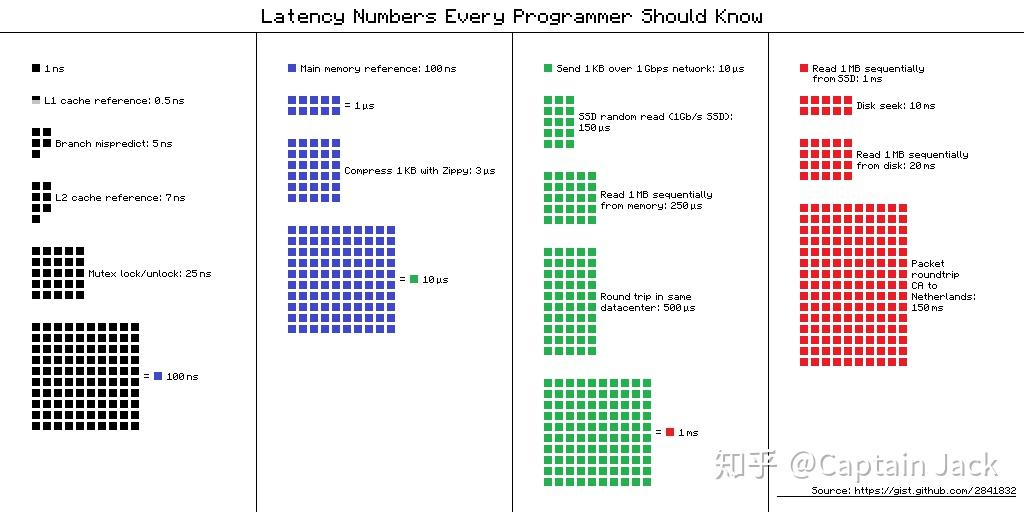
测试代码:
#include <iostream>
#include <chrono>
#include <algorithm>
using namespace std;
using Size = int;
void count1(unsigned char *db, const Size size, Size *tab) {
auto tab0 = tab;
auto tab1 = tab0 + 256;
auto tab2 = tab1 + 256;
auto tab3 = tab2 + 256;
for (size_t i = 0; i < size;) {
tab0[db[i++]]++;
tab1[db[i++]]++;
tab2[db[i++]]++;
tab3[db[i++]]++;
}
}
void count0(unsigned char *db, const Size size, Size *tab) {
for (size_t i = 0; i < size;) {
tab[db[i++]]++;
}
}
void init_db(unsigned char *db, Size size, bool seq = true) {
for (size_t i = 0; i < size; ++i) {
if (seq) {
db[i] = i % 256;
} else {
db[i] = 233;
}
}
}
inline void reset_tab(Size *tab, const Size size) {
for (int i = 0; i < size; ++i) {
tab[i] = 0;
}
}
template<class F, class ...Args, int times = 20, class unit=chrono::milliseconds>
void benchmark_this(F func, Args &&... args) {
auto t0 = chrono::high_resolution_clock::now();
for (int i = 0; i < times; ++i) {
func(std::forward<Args>(args)...);
}
auto t1 = chrono::high_resolution_clock::now();
cout << chrono::duration_cast<unit>(t1 - t0).count() / times<< endl;
}
int main() {
const Size L = 100000000;
const auto tab_len = 256*8;
unsigned char *db = new unsigned char[L];
Size tab[tab_len];
init_db(db, L);
benchmark_this(count0, db, L, tab);
reset_tab(tab, tab_len);
benchmark_this(count1, db, L, tab);
reset_tab(tab, tab_len);
init_db(db, L, false);
benchmark_this(count0, db, L, tab);
reset_tab(tab, tab_len);
benchmark_this(count1, db, L, tab);
reset_tab(tab, tab_len);
return 0;
}